
Commercial coffee machines work hard every day, and regular maintenance helps keep them producing consistent drinks while reducing avoidable downtime. A simple daily, weekly, and monthly maintenance schedule can help café and food-service staff catch coffee buildup, leaks, worn components, and water-quality issues before they become bigger problems.
For cafés, restaurants, hotels, offices, convenience stores, and commercial properties in North County San Diego, the key is knowing which maintenance tasks staff can safely perform and which problems require a qualified service technician.
Important: This checklist is a general maintenance guide. Always follow the cleaning, maintenance, and service procedures specified by the equipment manufacturer. Requirements can vary by machine make, model, workload, and configuration.
Commercial Coffee Machine Maintenance Checklist
| Frequency | Recommended Tasks |
| Daily | Clean coffee-contact components, purge and wipe steam wands, empty drip trays, flush group heads, perform approved backflushing, and check for leaks or unusual operation. |
| Weekly | Deep-clean removable components, inspect baskets, screens, and gaskets, clean accessible drains, check steam tips, and review water-filtration requirements. |
| Monthly | Review maintenance logs, inspect for wear and leaks, check for changes in brewing or steaming performance, review filter replacement dates, and identify recurring problems that may require professional service. |
What Commercial Coffee Machine Maintenance Should Be Done Daily?
Daily maintenance focuses on components exposed to coffee, milk, water, and residue. Cleaning these areas regularly helps prevent buildup that can affect equipment performance and beverage quality.
Daily staff checklist
- Wipe down the machine exterior and surrounding work area.
- Rinse portafilters and baskets to remove coffee grounds and residue.
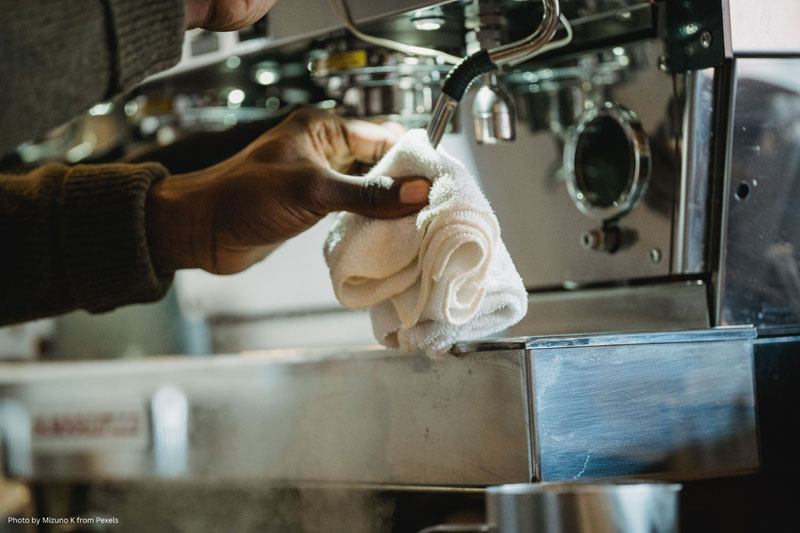
- Purge and wipe steam wands after each use.
- Clean steam tips according to the manufacturer’s instructions.
- Empty and clean drip trays.
- Keep accessible drains clear.
- Flush group heads to remove loose coffee grounds.
- Backflush compatible espresso machines according to the manufacturer’s instructions.
- Check for leaks, unusual noises, error messages, or changes in pressure or performance.
Staff should use only cleaning products and procedures approved for the specific equipment. Backflushing, cleaning cycles, detergent use, and other procedures can differ between manufacturers and machine models. Food-service operators should also follow applicable food-safety requirements for cleaning and maintaining equipment
What Should Be Done Each Week?
Weekly cleaning should address areas that may need more attention than they receive during normal daily closing procedures.
Weekly coffee machine cleaning checklist
- Deep-clean removable coffee-contact components with manufacturer-approved products.
- Inspect portafilter baskets and screens for coffee-oil buildup.
- Check group areas and gaskets for residue or visible wear.
- Inspect steam tips for restricted flow.
- Clean accessible drain components.
- Check water-filtration indicators and replacement schedules.
- Note changes in brewing consistency, temperature, pressure, or steam performance.
Recording these checks gives managers a simple way to confirm that maintenance procedures are being completed and identify recurring problems.
What Commercial Coffee Machine Maintenance Should Be Done Monthly?
Monthly maintenance should focus on identifying equipment problems and preventive service needs.
Managers and staff can review the machine for signs such as:
- Worn or damaged gaskets
- Water leaks
- Slow or restricted water flow
- Inconsistent group performance
- Unusual pump sounds
- Signs of mineral or scale buildup
- Recurring error messages
- Changes in brewing temperature, pressure, or steam performance
Water filtration also deserves regular attention. Water quality can contribute to mineral buildup and affect equipment performance. Review filter replacement dates and follow the water-treatment requirements specified for the equipment.
Monthly maintenance is also a good time to review the daily and weekly maintenance log. Recurring leaks, pressure changes, error codes, or cleaning issues may indicate that professional service is needed.
Which Commercial Coffee Machine Maintenance Tasks Require a Professional Technician?
Staff can generally handle routine cleaning, approved rinsing and backflushing procedures, and visual inspections covered by the equipment manufacturer’s operating instructions.
Internal mechanical, electrical, plumbing, and technical adjustments should be handled by a qualified commercial equipment technician.
Professional commercial espresso machine maintenance may include:
- Boiler and heating-system inspection
- Pump diagnosis and repair
- Valve inspection or replacement
- Pressure and temperature adjustments
- Internal leak diagnosis
- Electrical troubleshooting
- Replacement of worn internal components
- Preventive service based on manufacturer recommendations
Service frequency depends on the machine, workload, water conditions, age, and manufacturer’s requirements. A high-volume café may require more frequent professional attention than a lower-volume office coffee setup.
When Is Commercial Coffee Machine Repair Needed?
Commercial coffee machine repair may be necessary when routine cleaning does not resolve a performance problem or when the equipment develops a mechanical, plumbing, or electrical fault.
Common warning signs include:
- Leaking water
- Inconsistent brewing temperatures
- Weak or inconsistent steam pressure
- Abnormal pump or machine noises
- Repeated error codes
- Slow brewing or filling
- Inconsistent performance between group heads
- Failure to heat, fill, or operate correctly
- Recurring problems after cleaning
If an issue falls outside normal staff cleaning or operating procedures, document the symptoms and contact a qualified technician.
Continuing to operate equipment with an unresolved mechanical or electrical problem can lead to a longer service interruption. Early diagnosis can help businesses address problems before they interfere with a busy service period.
How Can Preventive Maintenance Reduce Coffee Machine Downtime?
Preventive maintenance helps staff and technicians identify buildup, wear, filtration issues, leaks, and changes in equipment performance before they become more disruptive problems.
For a café or restaurant, an unexpected coffee machine failure during a busy service period can interfere with drink production and daily operations. A consistent maintenance schedule helps businesses identify potential issues earlier and gives managers greater control over when professional service is performed.
Keep a Commercial Coffee Machine Maintenance Log
A simple maintenance log can record:
- Daily cleaning
- Weekly inspections
- Filter changes
- Technician visits
- Repairs
- Replacement parts
- Error messages
- Recurring performance problems
This history provides managers with a record of equipment maintenance and can also give a technician useful information when diagnosing a recurring issue.
Need Help With Commercial Coffee Equipment?
If your commercial coffee machine is leaking, losing pressure, producing inconsistent results, or displaying recurring error messages, professional service can help identify the underlying problem.
NCB Sales provides commercial coffee equipment sales, service, and maintenance support for businesses in North County San Diego and surrounding service areas.
For businesses that depend on their coffee equipment every day, regular maintenance and timely repairs can help keep equipment operating reliably and minimize unexpected interruptions.
Frequently Asked Questions
How often should a commercial coffee machine be cleaned?
Coffee-contact components should be cleaned according to the manufacturer’s instructions, with routine cleaning typically incorporated into daily operations. Additional weekly and monthly checks can help identify buildup, wear, and equipment problems.
How often should a commercial espresso machine be serviced?
Follow the manufacturer’s preventive-maintenance schedule. Service frequency may also depend on machine usage, water conditions, equipment age, and the operating environment. High-volume commercial equipment may require more frequent professional attention.
Can café employees clean a commercial coffee machine?
Yes. Staff can generally perform routine cleaning, rinsing, approved backflushing, and visual inspections when those procedures are covered by the manufacturer’s operating instructions. Internal repairs, electrical work, plumbing work, and technical adjustments should be handled by a qualified technician.
What are the signs that a commercial coffee machine needs repair?
Leaks, inconsistent temperatures, pressure problems, unusual noises, repeated error codes, slow brewing, filling problems, or recurring performance changes can indicate that the machine should be professionally inspected.
How does water quality affect commercial coffee equipment?
Water quality can contribute to mineral buildup and affect equipment performance. Proper filtration, water treatment, and scheduled filter replacement should be part of the maintenance plan when required by the equipment manufacturer.
Summary: Use a Consistent Commercial Coffee Machine Maintenance Schedule
A reliable maintenance program separates routine staff tasks from professional service. Staff should handle daily cleaning and scheduled visual checks according to the manufacturer’s instructions, while qualified technicians should diagnose internal mechanical, electrical, plumbing, pressure, and heating problems.
For businesses in North County San Diego, a written daily, weekly, and monthly schedule makes maintenance responsibilities clear, creates a useful service history, and can help reduce unexpected equipment downtime.